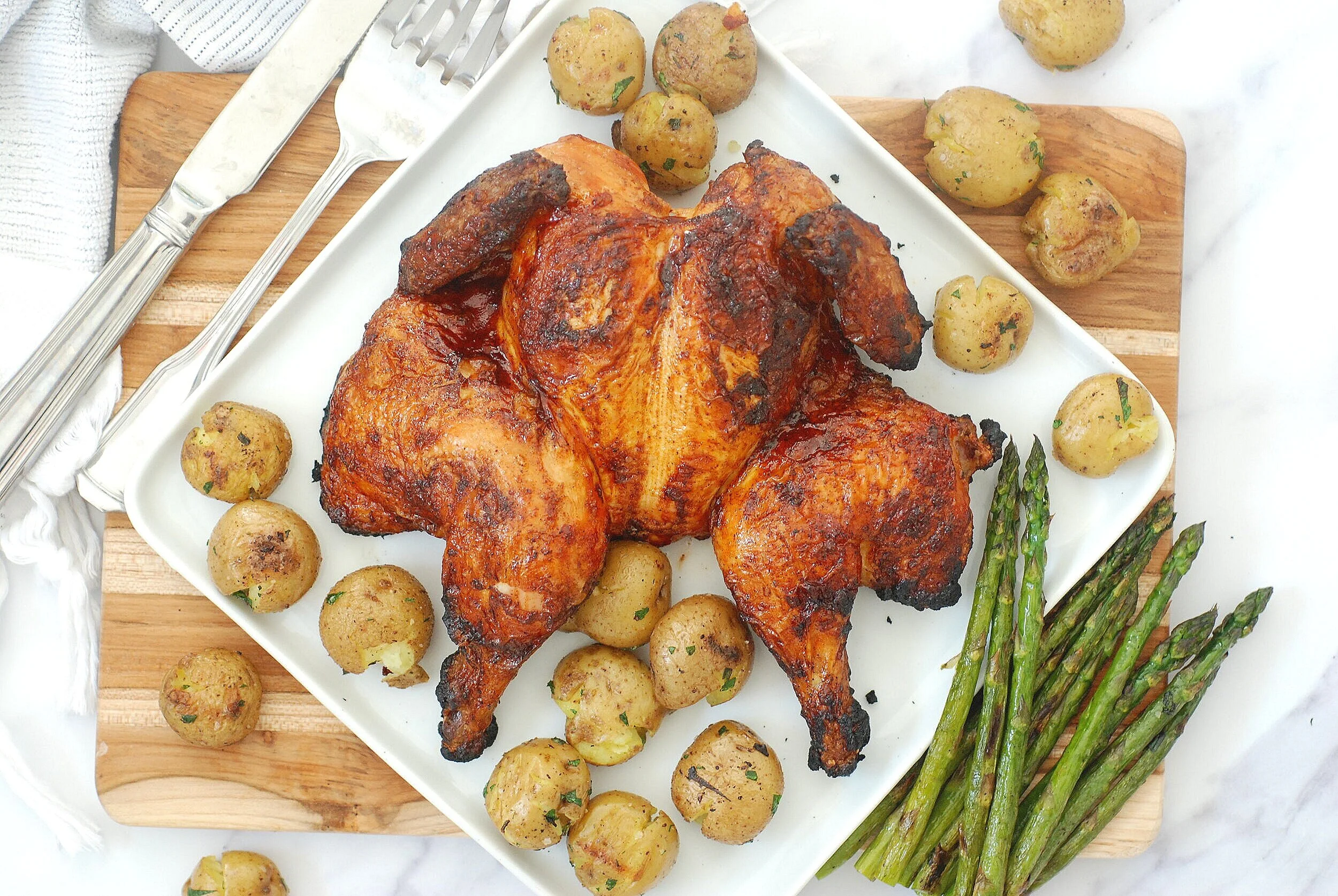
The quest for the perfect roasted chicken often feels like a culinary tightrope walk. You crave that beautifully golden, impossibly crispy skin, yet dread the inevitable dry, stringy breast meat that often accompanies it. It's a dilemma familiar to home cooks everywhere: how do you ensure the dark meat is cooked through without turning the delicate white meat into sawdust? The solution, surprisingly simple yet incredibly effective, lies in mastering the art of the spatchcock chicken.
Far from an intimidating technique, spatchcocking is a game-changer that transforms a standard roast chicken into a succulent, flavorful masterpiece. It promises not just a consistently juicy bird but also a delightfully crispy skin and a significantly reduced cooking time. If you've ever wrestled with an unevenly cooked whole chicken, prepare to have your roasting world revolutionized.
The Dry Meat Dilemma: Why Traditional Roasting Falls Short
A whole, intact chicken presents a unique challenge in the oven. The bird's uneven shape means different parts cook at different rates. The dark meat, found in the thighs and drumsticks, contains more connective tissue and fat, requiring a longer cooking time and higher internal temperature to become tender. Conversely, the lean breast meat cooks much faster and can quickly become dry if overcooked.
When you roast a whole chicken conventionally, by the time the thighs reach their optimal tenderness and temperature, the breasts have often already surpassed their peak, sacrificing their natural moisture and tenderness. This results in a frustrating compromise: either perfectly cooked dark meat with dry white meat, or undercooked dark meat with perfectly cooked white meat. It's a culinary tightrope that many home cooks find difficult to navigate, leading to less-than-stellar results and a lingering disappointment.
What is Spatchcock Chicken, and Why Does It Work So Well?
At its heart, spatchcocking is a technique where you remove the chicken's backbone and flatten the bird out, typically by pressing down on the breastbone until it cracks and the chicken lies flat. This simple act, also known as butterflying, unlocks a cascade of benefits that addresses all the common pitfalls of traditional roasting.
The term "spatchcock" itself has a fascinating history, tracing its roots back to 18th-century Ireland. "Spatch" is a shortened form of "dispatch," implying speed and efficiency, while "cock" refers to a male bird. Essentially, it meant to prepare and cook a chicken quickly and effectively. This historical context perfectly captures the essence of the method, which has since gained global popularity for its unparalleled results.
The Triple Threat of Spatchcocking: Crispier Skin, Juicier Meat, Faster Roasting
- Even Cooking: By flattening the chicken, all parts of the bird are exposed to the heat source more uniformly. The legs and thighs, which typically take longer, are no longer tucked away, allowing them to cook at a similar rate to the breasts. This eliminates the "dry breast, undercooked thigh" conundrum, ensuring every bite is perfectly cooked.
- Crispier Skin: With the chicken spread out, a much larger surface area of the skin is directly exposed to the oven's heat. This direct exposure, combined with the hot air circulating around the flattened bird, leads to an unbelievably golden and cracklingly crispy skin that's impossible to achieve with a traditional roast.
- Juicier Meat: Because the chicken cooks more evenly and efficiently, there's less risk of overcooking any single part. The breasts reach their optimal internal temperature without drying out, while the dark meat cooks through to tender perfection. The result is consistently succulent and flavorful meat throughout the entire bird.
- Faster Roasting Time: Flattening the chicken significantly reduces its overall thickness, allowing heat to penetrate more quickly and efficiently. What might take an hour and a half for a whole bird can often be accomplished in as little as 40-50 minutes with a spatchcock chicken, making it an ideal choice for weeknight dinners without sacrificing quality.
Unleashing the Flavor: Beyond the Basics of Spatchcocking
While the spatchcock technique itself is a marvel, it also provides a fantastic canvas for flavor. Because the entire surface of the chicken is exposed, it's easier to achieve robust seasoning and infuse the meat with aromatics.
Simple Seasoning, Big Impact
Often, the best flavors come from the simplest preparations. A generous rub of olive oil, kosher salt, freshly ground black pepper, and perhaps a touch of fresh thyme leaves and lemon zest is all it takes to elevate a spatchcock chicken. The lemon zest brightens the flavor, while the salt penetrates the meat, ensuring it's seasoned from within. For added depth, you can scatter fresh rosemary sprigs and smashed garlic cloves directly in the roasting pan around the chicken. As the chicken roasts, these aromatics release their fragrance, subtly flavoring the pan juices and adding a wonderful aroma to your kitchen.
One-Pan Wonders and Elegant Presentation
The flattened form of a spatchcock chicken is also perfect for creating effortless one-pan meals. You can arrange hardy vegetables like Brussels sprouts, carrots, potatoes, or even more garlic cloves around the chicken in the same roasting pan. As the chicken cooks, its delicious juices drip onto the vegetables, imbuing them with incredible flavor. This means less cleanup and a complete, wholesome meal ready to serve straight from the oven.
Despite its simplicity, a perfectly roasted spatchcock chicken, with its evenly golden-brown, crispy skin, presents beautifully on any table. It looks impressive enough for a dinner party but is straightforward enough for a casual weeknight family meal. The elegant presentation is just another bonus of this versatile cooking method.
Your Step-by-Step Guide to Mastering Spatchcock Chicken
Don't let the name or the idea of "butchering" a bird deter you. Spatchcocking is surprisingly easy and requires only one essential tool: sharp kitchen shears. For a more detailed visual guide on the technique, explore our article on How to Spatchcock Chicken: Your Guide to a Faster, Juicier Roast.
- Preheat Your Oven: Start by preheating your oven to a robust 425°F (220°C). Place a wire rack over a large sheet pan or roasting pan to ensure air circulation around the chicken, which contributes to crispier skin.
- Prepare the Chicken: Place the whole chicken breast-side down on a cutting board. Using sturdy kitchen shears, carefully cut along one side of the backbone, from the tail end up towards the neck. Repeat on the other side of the backbone. Once both cuts are made, remove the backbone. (Don't discard it! It's fantastic for making chicken stock.)
- Flatten the Bird: Flip the chicken breast-side up. Using the heel of your hand or both hands, press firmly down on the breastbone until you hear a crack and the chicken lies relatively flat. This opens up the bird, ensuring even cooking.
- Season Generously: Pat the flattened chicken dry with paper towels – this is crucial for crispy skin. Rub it all over with olive oil, then season liberally with kosher salt, freshly ground black pepper, and any other desired herbs like fresh thyme or lemon zest. You can even squeeze half a lemon over it and leave the spent halves in the pan.
- Add Aromatics (Optional): For extra flavor, scatter rosemary sprigs, smashed garlic cloves, or even chopped root vegetables around the chicken in the pan.
- Roast to Perfection: Place the chicken on the prepared rack and roast for 40-50 minutes, depending on its size. The skin should be deeply golden brown. To confirm doneness, insert a meat thermometer into the thickest part of the thigh (avoiding the bone); it should read 160-165°F (71-74°C). The temperature will rise a few degrees as it rests.
- Rest and Serve: This step is non-negotiable! Remove the chicken from the oven and tent it loosely with foil. Let it rest for 10-15 minutes before carving. This allows the juices to redistribute throughout the meat, ensuring every slice is incredibly juicy and tender. Carve and serve with the delicious pan juices and any roasted vegetables.
Spatchcock Chicken: A Culinary Game-Changer for Every Occasion
Once you try a spatchcock chicken, you'll likely wonder why you ever roasted a bird any other way. The ease of preparation, combined with the superior results – impossibly crispy skin, succulently juicy meat, and significantly faster cooking times – makes this technique a genuine culinary game-changer. It's truly simple enough for a bustling weeknight yet yields a result impressive enough to anchor a special gathering or Sunday dinner. The benefits of this method, from faster roasts to crispier skin and juicier meat, are undeniable, as we discuss further in Spatchcock Chicken: Faster Roasts, Crispier Skin, Juicier Meat.
Beyond its culinary prowess, spatchcocking also opens the door to excellent meal prep. Leftovers are wonderfully versatile, perfect for sandwiches, salads, quesadillas, or as a protein addition to grain bowls.
So, the next time you're planning a roast chicken, banish the fear of dry meat. Embrace the elegance and efficiency of the spatchcock chicken. With just a few simple cuts, you'll unlock a world of flavor, texture, and convenience that will make you a confident and celebrated roast chicken master.
